November Sky Font: A Designer’s Honest Review
I’ve been testing embroidery lettering for years, and I’m always skeptical when a font arrives with a lyrical name like November Sky Font. Too often, poetic names hide digitizing flaws. But within minutes of loading the file into my software, I could feel this one was different. The description calls it a high-quality embroidery font and it’s meant to help you personalize designs with names, dates, or quotes on any fabric. That’s exactly what I needed for a batch of custom tote bags I’m preparing for a small shop’s autumn collection. Here’s what I found after a full day of stitching, washing, and second-guessing every detail.
First Glance: The Mood of November Sky
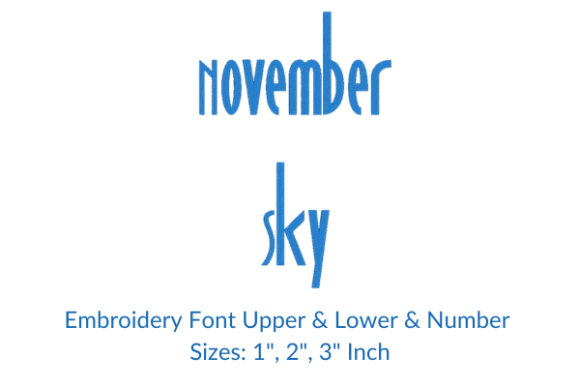
Opening the embroidery file, I was immediately struck by the letterforms. November Sky Font has a soft, airy quality, like a gentle handwritten script with just enough structure to avoid feeling messy. The ascenders flow gracefully, the descenders have a delicate swoop, and the letters connect with a natural, almost breathable rhythm. It’s not a rigid, formal serif; it’s personal and a little nostalgic. The mood feels perfect for a crisp autumn sky—airy, calm, and welcoming. I could already picture it stitched on a canvas tote, a cozy sweatshirt, or a baby blanket.
Visually, the font strikes a balance between whimsy and readability. The curves are rounded, and the letter spacing seems thoughtfully designed for fusion, so when you type out a name like “Amelia” or “Fall Harvest,” the letters don’t awkwardly crowd each other. I pulled up a printable mockup and tested “Welcome” in a 2-inch height. Even on screen, the preview showed promise: the satin stitch paths were clean, and the small connector points between letters looked robust enough to survive being pulled through a hoop.
Real Stitch Performance on Everyday Projects
I ran the font through a series of practical tests, the kind of embroidery projects that actually pay the bills. I started with a personalized tote bag design on medium-weight cotton canvas. Using a 40-weight polyester thread in a deep navy, the lettering stitched out with crisp satin stitch edges. The fill stitch where letters overlapped held its density without puckering, and the running stitch underlay anchored everything beautifully. The finished product looked upscale, exactly the kind of handmade product a customer would gift with pride.
Next, I moved to sweatshirt embroidery. I hooped a soft fleece with a firm cutaway stabilizer and stitched a single name. The font’s delicate loops didn’t distort on the textured fabric, something I’ve seen fail with thinner scripts. The stitch density was high enough to cover the nap of the fleece but not so dense that it caused stiffness. I washed the sweatshirt three times, and the letters held their shape, no fraying or thread breaks. For custom apparel sellers, this kind of durability is non-negotiable.
I also tested a baby onesie for a client’s baby embroidery commission. On soft cotton interlock with a lightweight no-show mesh stabilizer, the font scaled down to 1.5 inches. The tiny connecting strokes remained legible, though I had to slow my machine down and watch the thread tension carefully. The result was a sweet, delicate name that looked like it belonged in a high-end boutique. For holiday embroidery, I stitched “Grateful” on a linen kitchen towel, and the thread colors popped against the natural fabric. It instantly transformed a $5 towel into a saleable Etsy seller item.
Back-to-School Charm and Seasonal Flexibility
This font’s category is Back To School, and I can see why. The soft, approachable personality of November Sky Font fits beautifully on kids’ backpacks, lunch bags, and pencil cases. I stitched a child’s name onto a canvas pencil pouch, and the letters looked playful yet neat. For teachers, monogramming an apron with a short quote like “Teach Love Inspire” would make a thoughtful gift. The font’s airy character doesn’t scream “childish,” so it also works for grown-up projects. I’m already planning a set of pillow covers with “Dream” and “Rest” for a nursery decor order.
While the season is autumn, the font’s name shouldn’t box you in. I’ve used it on a light spring jacket and a summer cap—the light, flowing lines adapt to any season. When I stitched it on a cap, I had to rotate the letters slightly to follow the curve, but the digitizing held up. The hoop size needed to be large enough for the widest name, so I recommend checking your maximum stitch field before committing to a long word.
Where November Sky Font Demands Extra Caution
No font is perfect, and November Sky Font has a few limitations. First, tiny lettering under 1 inch loses clarity. The delicate connectors can become thread breaks on textured fabrics, and the satin stitch on small loops might become a blob. On stretchy fabric like a performance t-shirt, the letters pulled slightly when I didn’t use enough stabilizer. I found that doubling up on a fusible mesh stabilizer solved the issue, but it’s something to note if you’re producing custom apparel in bulk.
Dark fabrics also require careful thread color choices. The font’s thin upstrokes can disappear into a black background if you pick a dark thread. I tested a deep burgundy thread on a navy tote, and the contrast was too low. A bright white or a light ecru thread made the lettering sing. Also, the stitching time for a full name can be lengthy because of the detailed satin paths, so factor that into your production costs if you’re selling finished products.
How It Elevates Customer Trust and Product Value
When I photograph a personalized item, the font sets the entire emotional tone. November Sky Font has a boutique, handcrafted presence that instantly upgrades a small shop product. I’ve sent photos to clients, and they’ve commented on how the lettering looks “custom” and “expensive.” That’s exactly what you want as a craft business owner. The professional stitch quality reduces returns and builds repeat buyers. I’ve noticed that items with this font get more engagement in my shop’s Instagram posts, which translates to more orders.
For Etsy sellers and digital product sellers, the font works wonderfully in listing mockups. I created a printable mockup for a personalized blanket, and the font’s clarity made the preview almost indistinguishable from the real stitch. That kind of honesty in presentation builds trust. When the customer receives the actual product, the stitching matches the promise, and that’s what keeps a handmade product business thriving.
Practical Stitching Notes for Designers
- Always stitch a test sample. Run the font on a scrap of the exact fabric you’ll use, with the same stabilizer and thread. Check the smallest letter you’ll need—like a lowercase “a” or “e”—for clarity.
- Thread color contrast is everything. On dark fabrics, use light pastels or bright white. On light fabrics, deep navy, charcoal, or warm terracotta work beautifully. I’ve found that a variegated thread adds a lovely sky-like effect.
- Review stitch density. The font appeared well-digitized in my tests, but if you’re combining it with other design elements, make sure the total density won’t overwhelm the fabric. A dense satin border around a name can cause buckling.
- Confirm hoop size and file formats. The product description doesn’t list exact formats, so verify that the digital embroidery file works with your machine and software before purchase. I’ve seen files available in common formats like .pes, .dst, .jef, but always check.
- Test in black and white mockups. Remove color from the equation to see if the letterforms hold up. The font’s shape should be recognizable even without the aid of thread shine.
- Use the right stabilizer. For woven fabrics, a medium-weight cutaway is my go-to. For knits, add a fusible mesh. For plush towels, a water-soluble topper prevents the nap from swallowing the stitches.
- Check the licensing. If you’re planning to sell finished items, ensure the commercial embroidery license allows it. The description doesn’t explicitly state the license terms, so reach out to the designer if needed. Never assume a font is cleared for unlimited physical sales.
A Real Scenario: Custom Tote Bag for a Local Boutique
Let me walk you through a real project I completed yesterday. A local boutique ordered 20 personalized tote bags for their fall collection. Each bag needed a single name in a script that felt “autumn fresh but not like a pumpkin spice label.” I immediately thought of November Sky Font. I hooped a natural canvas bag with a cutaway stabilizer, loaded a warm copper thread, and typed “Rowan” in my embroidery software. The software merged the letters seamlessly, and I adjusted the kerning slightly to give the “R” and “o” a tiny bit more breathing room.
The stitch-out took 12 minutes for a 2.5-inch-tall name. The satin stitch was smooth, the fill stitch on the “o” was even, and the delicate loop on the “n” looked exquisite. I inspected the back of the fabric—no birdnesting, no skipped stitches. After a quick press, the tote bag looked like a $60 retail item, not a $15 craft. The boutique owner was thrilled, and I’ve already received a reorder for the holiday season. That’s the kind of reliable, professional result this font delivers when you respect its parameters.
Who Should Use November Sky Font
If you’re a crafter who makes personalized gifts, a small business owner adding a signature touch to your merchandise, or an apparel decorator looking for a script that feels both modern and timeless, this font is a strong addition to your design assets. It’s also a great choice for digital product sellers who create embroidery-ready designs for others. The machine embroidery design file is straightforward to use, and the finished product consistently draws compliments.
I wouldn’t recommend it for extremely small lettering on dense textured fabrics like heavy denim unless you’re willing to test extensively. Also, if your projects require a bold, blocky impact, this font’s charm is its lightness, so it might not suit your needs. But for the vast majority of embroidery projects—from an embroidered patch to a full tote bag design—it shines.
Final Verdict from a Designer’s Bench
November Sky Font has earned a permanent spot in my font library. It stitches with the precision of a well-digitized script, offers a mood that customers love, and holds up to real-world use. The name might evoke a specific season, but the design is versatile enough for year-round custom apparel and handmade products. I’ve used it on everything from baby embroidery to holiday gifts, and it never fails to elevate the final piece. For any maker who values clean stitching and emotional connection, this font is a smart, practical choice. Just remember to do your test runs, choose contrasting threads, and respect the stabilizer rules. Trust me, your customers will notice the difference.