Apple Made of Flowers: A Designer Review for Merch
First Impressions: Whimsical Charm Meets Brand Potential
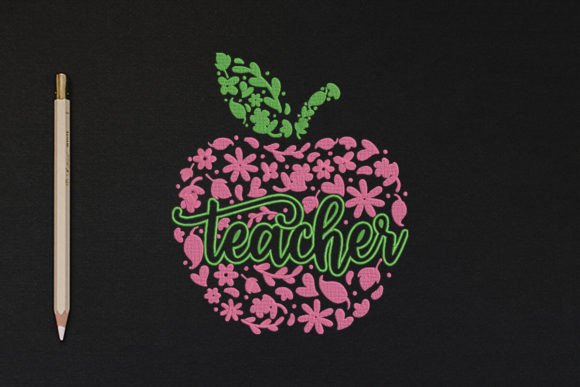
When I first pulled up the Apple Made of Flowers design, what immediately struck me was its oddly balanced personality. The description promises a “cool” and “whimsical accent,” and that’s exactly what you get—a blend of fruit silhouette and floral detailing that feels both playful and surprisingly sophisticated. This isn’t your typical back-to-school apple graphic. There’s no chalkboard, no ruler, no obvious academic cliché. Instead, the apple becomes a vessel for blooms, leaves, and organic shapes. For a small business owner, this is a smart, versatile asset. It reads as handcrafted, slightly rustic, and intentionally decorative. You could drop it on a bakery apron, a florist’s tote bag, or a boutique’s staff shirt and it would instantly make the piece feel curated, not just branded.
As a machine embroidery designer, I look for designs that translate well from screen to thread. Apple Made of Flowers immediately suggests a strong visual impact without relying on heavy shading or complex gradients. The floral construction inside the apple shape means you’re likely working with well-defined petal sections, curved outlines, and layered elements. That’s a texture conversation waiting to happen. In my experience, floral motifs tend to stitch out beautifully when digitized correctly, because the organic lines forgive slight misalignments. The key is that the design feels simultaneously clean and organic—exactly the vibe many handmade brands, studios, and creative shops chase.
How Apple Made of Flowers Fits Real Business Merchandise
Let’s move past decoration and into actual business use. I’ve tested hundreds of embroidery file options for client projects, and I always ask the same question: does this help a brand make money, build recognition, or create a memorable product? Apple Made of Flowers holds its own on multiple fronts.
Embroidered Patches and Small Branding Accents
One of the most immediate uses I see is as an embroidered patch. A standalone patch can be sewn onto denim jackets, canvas bags, or even sold as a standalone product in a craft or gift shop. The floral-apple motif is gender-neutral and seasonally flexible. It could easily be a spring collection patch or a subtle fall nod when worked in warmer thread tones. Because the design is built around a recognizable fruit shape, it works as a chest logo accent or a sleeve detail without needing accompanying text. That’s a huge win for brands that value visual minimalism. I’ve seen bakeries use a similar approach—a small apple patch on a baker’s cap or apron—and it instantly communicates fresh, natural, handmade without a single word.
For patch production, stitch density becomes critical. Too dense and the patch becomes stiff and prone to puckering; too light and the floral details wash out. I always recommend test stitching the digital embroidery file at the intended patch size before committing to a bulk run. The petals need to breathe, and the outline should be crisp enough to define the apple shape from a distance.
Apparel Embroidery: Caps, Aprons, and Uniforms
When I think of custom apparel for small businesses, three items sit at the top of my list: caps, aprons, and work shirts. Apple Made of Flowers is a natural fit for all of them. On a cap, the design would work beautifully on the front center or as a side hit. The curved, organic shape can soften the structured panels of a baseball cap, making it feel less promotional and more like a piece of boutique merchandise. I’d caution, though, that cap embroidery demands a smaller hoop area and often a curved surface. I’d want to test the design at no larger than 2.5 inches wide to make sure the flower details don’t blur together. The last thing you want is a clumpy, unrecognizable smudge on a cap front.
Aprons are a different story. With a larger hoop size and a flatter fabric surface, you can let the design breathe. An apron gives you the real estate to place the apple prominently on the chest or as a pocket detail. For a florist, a café, or a farm-to-table restaurant, this design on an apron immediately ties the wearer to a natural, friendly brand identity. The same goes for work shirts and uniforms. A small chest embroidery or a larger back print adaptation (using the embroidery file as a patch) can transform a utilitarian garment into a branded touchpoint.
Tote Bags and Home Decor as Brand Statements
I’ve watched many Etsy sellers and craft business owners use tote bag design as a low-cost, high-impact merch item. Apple Made of Flowers stitched onto a canvas tote bag instantly elevates the bag from a plain carrier to a product worth gifting. It’s the kind of design that makes customers feel like they’re buying something from a real studio, not a drop-shipping site. Because the motif is decorative without being overly niche, it can cross over into home decor—think tea towels, pillow covers, or even a framed embroidery hoop art piece. The description mentions t-shirts, towels, and home decor, and I agree. The design’s charm lies in its adaptability. Throw it on a set of hand towels and you’ve got a farmer’s market-ready product. Put it on a t-shirt and it’s a whimsical, everyday statement piece.
From a business perspective, these items are money-makers. They’re quick to produce once the machine embroidery design is digitized and tested, and they carry a high perceived value. Customers consistently pay more for a towel with a thoughtful, stitched design than a plain one. That’s the power of commercial embroidery—it adds texture and permanence that screen printing can’t match.
Where to Be Cautious: Size, Fabric, and Wear Concerns
No design is bulletproof. As a professional embroidery designer, I have to flag the areas where Apple Made of Flowers might trip you up. The first is small patch sizes. If you try to shrink this design down to a 1-inch patch, especially for a cap or a small label, those delicate flower petals and inner lines will likely close up. Test it first in black and white, no color, just to see if the composition holds. If the apple shape dissolves into a blob, you’ll need to resize or simplify.
Curved surfaces are another challenge. Caps, sleeves, and the upper chest of a fitted shirt all have a curve that can distort a flat design. I’ve ruined more than one sample by ignoring this. The apple’s rounded shape is friendly, but it can look warped if not positioned correctly. Always use a printable mockup and a real fabric test before client approval.
Fabric texture matters. A loose weave, a heavily textured towel, or a stretchy knit will pull the stitches in unpredictable ways. I’d lean toward a medium-weight canvas, denim, or a stable cotton twill for the cleanest finish. Use a proper stabilizer—cut-away for knits, tear-away for wovens—and don’t skip the topper if you’re working on anything with a pile. And please, wash it. A finished product that goes through the laundry looking like a crumpled napkin will erode trust faster than any competitor.
Dark uniforms present a color contrast puzzle. If the apple outline is too light and the flower petals are too dark, the design can lose its pop. I always view the thread colors in greyscale first to check contrast. You want the apple shape to be instantly recognizable, even on a black apron. The same goes for detailed outlines—if they’re too thin, they can get lost, especially after repeated washing. That’s a stitch density and digitizing decision, not necessarily a flaw of the design itself, but it’s something to scrutinize.
What This Design Does for Your Brand Identity
Let’s talk about the intangible stuff. Brand identity isn’t just a logo; it’s the feeling a customer gets when they see your product. Apple Made of Flowers injects a sense of warmth, creativity, and approachability. It’s not a harsh, corporate mark. It’s an invitation. For a small business merch line, this design can help position your brand as friendly, nature-inspired, and artisanal. I’ve worked with countless bakeries, pet brands, and creative studios, and they all chase this exact vibe—polished but not pretentious, handmade but durable.
When a customer receives a tote bag with this embroidery, they’re not just seeing a logo; they’re seeing a deliberate act of care. That builds customer trust and loyalty. Visual consistency across your design assets—your website, your packaging, your embroidered goods—reinforces that you’re a serious business, not a hobbyist. The apple motif itself can carry subtle seasonal meaning. In a Back To School context, it’s a gentle nod to teachers, students, and fresh starts. But it’s not limited to that. I could see a florist using it year-round, or a pet brand incorporating it as a “fresh and natural” emblem. That flexibility means you’re not stuck with a design that only works one month a year.
Professionalism isn’t about being boring. It’s about being intentional. Apple Made of Flowers is intentional. The curves, the floral fill, the balance—it all signals that you’ve thought about your finished product. That’s what elevates buyer engagement and turns a one-time customer into a repeat buyer.
Designer’s Practical Checklist Before You Stitch
I never run a production batch without a checklist. Here’s what I’d do before using Apple Made of Flowers for any commercial project:
- Test in black and white first. If the design holds up without color, it’ll hold up with any thread palette.
- Verify the hoop size and file specs. The description doesn’t list exact dimensions, so check the digital embroidery file details before loading it. Don’t assume it fits your smallest hoop.
- Stitch a sample at the intended size. Evaluate the stitch density and spacing. Are the petals distinct? Does the apple outline read clearly?
- Play with thread colors. Even if the design comes with a suggested palette, swap colors to match your brand. A soft peach and sage palette can transform the mood entirely.
- Use the right stabilizer and fabric. Match the stabilizer to the base fabric. A flimsy tear-away on a stretchy t-shirt is a recipe for disaster.
- Create a printable mockup for client approval. Show the design on the actual garment before you sew. It saves time and builds trust.
- Compare it beside your other design assets. Does it complement your existing logo, or does it clash? Visual consistency is key.
- Confirm commercial licensing. The description doesn’t specify usage rights, so always verify that the embroidery file is cleared for commercial embroidery and resale. You don’t want a legal snag after you’ve sold 100 patches.
If you’re an Etsy seller or a craft business owner, treat this design as a raw material. It’s the starting point, not the final product. Your fabric choices, your thread pairing, your placement—these are what turn a generic machine embroidery design into a handmade product that people will pay a premium for.
Final Verdict on Apple Made of Flowers for Commercial Use
So, would I use Apple Made of Flowers for a paying client? Absolutely. With the right preparation, it’s a versatile, emotionally resonant design that adds immediate value to small business merch. It’s not a one-size-fits-all solution—you’ll need to mind the stitch details, the fabric, and the size—but that’s true of any embroidery file worth its thread. The whimsical charm it delivers is genuine, and that’s a rare quality in a market flooded with generic clip art swiped from a stock site.
For custom apparel, apron embroidery, cap embroidery, or tote bag design, this motif can anchor a collection. It can be the signature patch on a café’s staff uniform, the subtle accent on a boutique’s product packaging, or the hero of a brand identity refresh. The fact that it nods to the Back To School category without being limited to it is a strength. Treat it as a design asset that can speak to many audiences in many seasons.
My advice: don’t just stitch it and call it done. Test it, tweak it, and let it become part of your brand’s visual language. When you’re running a small business, every thread matters. Apple Made of Flowers is a thread worth pulling.