Pre-School Bae, Elementary School: A Craft Fair Review
When a new machine embroidery design lands in my digital library, the first thing I do is picture it on a finished product sitting under a craft fair tent. Pre-School Bae, Elementary School immediately sparked that booth-day vision. It’s playful, a little trendy, and wrapped in that back-to-school energy that draws parents, teachers, and gift shoppers straight to your table. As an embroidery designer who stitches for handmade markets every season, I’m going to walk you through exactly how this design performs, where it shines, and what you need to know before you load the hoop and start selling.
First Impression: Playful, Warm, and Instantly Readable
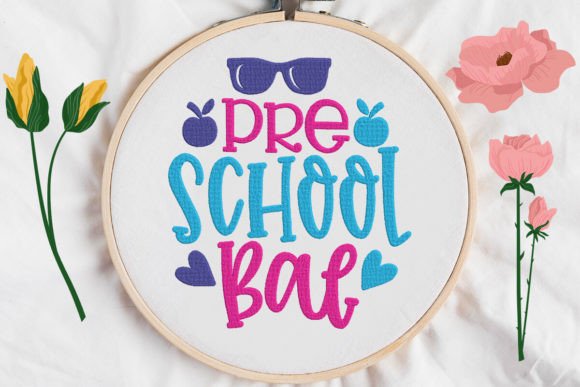
Open the file, and Pre-School Bae, Elementary School reads like a gentle inside joke that every parent of a little one will smile at. The phrase “Pre-School Bae” is a clever twist on modern slang, paired with the straightforward “Elementary School” it feels like a celebration of early childhood milestones. It’s not overly cutesy, not overly formal—it lands in that sweet spot of joyful and charming exactly as the description promises. I can already see it stitched in soft primary colors on a natural canvas tote, or popped in bright thread on a crisp white tea towel. The design mood is modern farmhouse meets playful classroom, which means it fits both rustic handmade displays and clean, boutique-style tables.
From a booth perspective, this design’s appeal is instant. A customer walking by doesn’t need to squint or decode a complex scene. The words are likely the hero, so legibility is everything. I’d recommend checking the stitch density and small lettering carefully—if the “Pre-School” portion is too tiny or the lettering too tightly packed, it could lose clarity on textured fabrics. In my experience, a quick test stitch on a scrap of flour sack towel tells you everything you need to know about readability.
Where This Design Wins: Product Matchmaking
Not every embroidery file is a one-size-fits-all solution. Part of the craft fair prep is matching the design to the product that will make it fly off the shelf. Based on the title and the joyful vibe, Pre-School Bae, Elementary School is a natural for tote bag design and apron embroidery—especially those mini aprons for kids or a teacher’s market tote. I’d also test it on:
- Tea towel embroidery – a classic handmade gift, and this phrase on a flour sack towel becomes a sweet teacher appreciation present.
- Embroidered patch – stitch it on felt or twill, trim, and sell as a sew-on or iron-on patch. Tweens, teens, and moms love patches for backpacks and denim jackets.
- Fabric pouches – small zipper bags for pencils, snacks, or first-day supplies. A crisp, clean stitch on linen or cotton canvas looks premium.
- Pillow covers – a throw pillow with this design on a reading nook chair? Instant charm for a kid’s room or a classroom library.
- Market bags – lightweight, reusable bags with the design centered large become a walking advertisement for your booth.
- Caps – a curved cap is trickier, but if the design is compact enough, it can work on the front panel. Be mindful of the hoop size and the curve; a flat embroidery field on a cap is always a challenge.
For Etsy seller listings, this design also works beautifully as a printable mockup or digital asset to show customers what the finished product looks like. If you sell the embroidery file itself, make sure your listing photos include a real stitched sample, not just a digital preview. Buyers want to see how the threads lay on fabric.
Sizing, Placement, and Visual Impact
At a craft fair, you have about three seconds to grab someone’s attention. Pre-School Bae, Elementary School needs to be sized so that the phrase is readable from across the table. I’d aim for a finished design width of at least 4 inches on a tote bag front, or up to 6–7 inches on a tea towel center. If the design includes small decorative elements like tiny apples, pencils, or hearts, watch out for dense stitch areas that can pucker lightweight fabrics. A small accent, like a single tiny heart after “Elementary School,” is charming, but if it’s too dense, it may create a stiff spot that feels uncomfortable on a pillow or pouch.
The design likely works as a focal point, not a subtle accent. That’s great for booth products because you want pieces that say “handmade” and feel worth the price. I’d avoid shrinking it below 3 inches wide for lettering-dominant designs—small text can lose its counters and turn into blobs, especially on thick fabric or textured towels where the nap swallows fine details.
Dark Fabric, Bright Thread
If you plan to stitch on dark fabric—like a navy tote or black apron—thread contrast is your best friend. A soft pastel palette might look gorgeous on a white or natural background, but on dark fabric, you’ll need bright, light threads to make the design pop. I always test the same design on three different fabric colors and take photos under the lighting I’ll use at the booth. That way, I know which version photographs best for online listings and which one catches the eye in person.
Production Notes from the Embroidery Studio
As someone who stitches dozens of items for a single weekend market, I have a mental checklist for every new design. Here’s what I’d do before putting Pre-School Bae, Elementary School into production:
- Test on scrap fabric – always. I use the exact same fabric and stabilizer I plan to sell on. A smooth cotton tote behaves differently than a looped terry towel.
- Check thread contrast – if the design uses multiple colors, make sure there’s enough difference between them so it reads clearly at a distance.
- Review spacing – look at the gap between letters and any decorative elements. Tight spacing can cause thread breaks or a busy look.
- Confirm hoop size – the embroidery file will have a minimum hoop requirement. Don’t assume it fits your go-to hoop; measure the design bounds and give yourself at least half an inch of clearance on all sides for proper hooping and to avoid registration marks.
- Inspect stitch density – open the file in your software and check for overly dense areas that might cause needle breaks or puckering. If needed, adjust density slightly before stitching the final sample.
- Use the right stabilizer – for tote bags and tea towels, a medium-weight cut-away stabilizer is my go-to. For caps, a heavy-weight tear-away with a good adhesive backing is essential. For patches, a water-soluble topping on textured fabric helps keep stitches from sinking.
- Create at least one real mockup – stitch it, photograph it on a product, and use that image for your printable mockup or social media. Customers buy with confidence when they see a real, imperfect stitch (because handmade is real, not factory perfect).
- Compare fabric colors – I’ll stitch the design on a light, medium, and dark fabric to see which one sells best. Often, the same design can look completely different on a natural linen versus a bright white canvas.
- Confirm commercial licensing – before you sell any finished product, double-check the digital embroidery file terms. The description doesn’t explicitly state the license, so reach out to the designer or read the included file. Most files allow commercial use on physical items, but it’s your responsibility to verify.
Booth Display and Customer Engagement
I picture this design on a prominent display tier, maybe on a child-sized apron hung at eye level for parents, or a stack of folded tea towels with the stitching peeking out. Pre-School Bae, Elementary School has a natural conversation-starter quality. A buyer might laugh and say, “That’s totally my kid!” or “Perfect for my sister’s pre-school graduation.” That emotional connection is what turns a browser into a buyer. I’d group it with other back-to-school themed items, maybe a matching pencil-shaped keychain or a tiny apple patch, to create a mini collection that upsells itself.
For Etsy seller photos, shoot this design on a product that feels like a gift. A wrapped tea towel with a thank-you note for a teacher, or a tote bag filled with school supplies. The “giftability” factor is huge. If you also sell the digital embroidery file itself, show a photo of the stitch-out next to the printed design sheet, so customers know they’re getting a tangible, well-tested result.
Potential Pitfalls to Watch For
Even a charming design like this comes with a few watch-outs. The cut-off description mentions “joyful and charming,” which hints at possibly small decorative flourishes. Tiny details like stars, dots, or tiny lettering inside the phrase can be a nightmare on textured towels or curved cap surfaces. If the design includes a small subtext or a date, stitch it at the size you intend to sell before committing to a batch of 20. On thick fabrics like canvas, fine details can disappear; on slouchy pouches, a dense design can warp the fabric if not properly stabilized.
Also, consider the stitch density on stretchy items. If you’re planning to embroider on a knit fabric for a toddler tee, you’ll need a fusible stabilizer and possibly a design that isn’t too heavy. For something like a children’s garment, I’d probably stick to the tote bag, tea towel, and pouch route—those are safer, faster to produce, and more forgiving in a craft fair setting.
Final Verdict from a Seller’s Perspective
Pre-School Bae, Elementary School is the kind of design that makes a craft fair booth feel curated and personal. It’s not a generic “Back to School” script; it has personality. It works for parents, teachers, and even older siblings who want a fun patch. The production is straightforward as long as you respect the scale and test your fabric combo. For a small shop product lineup, this file can easily become a staple—repeatable, quick to stitch, and high in perceived value. I’d happily stock it as a best-seller next to my other handmade product favorites.
Before you load the hoop, get a clear answer on hoop size, stitch density limits, and license terms directly from the file. Then, stitch a sample, live with it for a day, and watch how people react. I have a feeling this one will spark a lot of smiles—and a lot of sales.