Science Teacher Embroidery Design: A Hands-On Review
When a customer reached out asking for a custom teacher appreciation tote bag featuring a science theme, I started browsing Creative Fabrica for something that felt thoughtful without being overly complicated to stitch. That search led me to the Science Teacher embroidery design, and I decided to put it through a full test run before committing to using it on a paid order. What follows is my honest, stitch-by-stitch evaluation of this design from the perspective of someone who machine embroiders for real handmade products every single day.
First Impressions and Visual Mood
The moment I opened the Science Teacher embroidery file, I could tell it was built with a clear sense of purpose. The design carries a playful yet respectful tone, blending classroom imagery with a celebratory feel that honors the dedication of educators. It strikes a balance between decorative charm and wearable appeal, which is exactly what you want when you are stitching onto items that real people will use, gift, or list in their Etsy shops.
What stood out immediately was the composition. The elements feel intentionally arranged rather than thrown together. There is a natural flow that guides the eye, and the visual weight distributes evenly across the design area. This matters a great deal when you are planning to place the design on a tote bag, a sweatshirt chest panel, or even a curved cap surface. A poorly balanced design can make a finished product look lopsided, but the Science Teacher design avoids that pitfall entirely.
The stitching personality leans into what I would describe as a clean, approachable aesthetic. There is a warmth to the design that makes it suitable for personalized gifts, and the decorative details feel intentional without crossing into overly dense territory. For anyone who has struggled with embroidery files that stitch beautifully on screen but turn into a puckered mess on fabric, this first impression was reassuring.
How the Design Handles in Real Embroidery Work
Before running the Science Teacher design on a customer order, I tested it on a mid-weight cotton canvas, the kind I typically use for tote bags and boutique merchandise. I also ran a second test on a cotton-poly blend sweatshirt fabric to see how it would perform on stretchy material. Both tests gave me valuable insights into how this machine embroidery design behaves under real-world conditions.
Stitch Density and Fabric Behavior
The stitch density across the design felt well-calibrated. There were no sections that seemed excessively heavy, which is a common issue with designs that rely heavily on satin stitch elements. Thick, dense stitching can make fabric stiff, cause puckering on lightweight material, and even lead to thread breaks mid-run. With the Science Teacher design, the fill stitch areas laid down smoothly, and the running stitch details added definition without adding unnecessary bulk.
On the sweatshirt test, I used a cutaway stabilizer and a water-soluble topper to prevent the knit fabric from swallowing the stitches. The design held up beautifully. The edges stayed crisp, and the small lettering elements remained legible, which is never a guarantee when you are stitching on textured or stretchy fabric. If you plan to use this design on baby blankets, pillow covers, or any fabric with a soft hand feel, proper stabilizer choice will be key, but the design itself cooperates well.
Small Details and Lettering
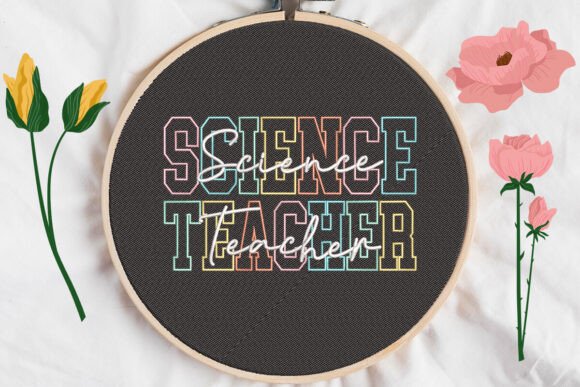
Any embroidery designer knows that tiny lettering is where many designs reveal their weaknesses. Thread can blur together, counters can close up, and what looked sharp in a digital preview can turn into an unreadable smudge on fabric. I inspected the Science Teacher design closely after stitching, paying particular attention to the smaller text elements and delicate outlines. I was pleased to see that the lettering maintained its clarity. The satin stitch width on the characters was narrow enough to feel refined but wide enough to remain distinct on dark fabric, which is a tricky balance to achieve.
That said, I would strongly recommend testing the design on a scrap of your intended fabric before stitching it onto a final product. Thread color contrast plays a huge role in legibility. A light thread on a dark tote bag will read differently than dark thread on a pastel kitchen towel. The design gives you flexibility here, but your choices in thread colors will make or break the final look.
Project Ideas Where This Design Shines
After running my tests, I started mentally slotting the Science Teacher design into various project categories. Some designs are one-trick ponies, only working on flat surfaces or specific items. This one feels more versatile. Here are the applications where I believe it would perform especially well:
- Tote bag design for teacher appreciation gifts or end-of-year presents
- Sweatshirt embroidery for custom apparel orders during the back-to-school season
- Apron decoration for science teachers who love wearing themed gear during lab days
- Kitchen towel accents for classroom fundraiser bundles or craft fair products
- Pillow cover embellishments for nursery decor or classroom reading nook spaces
- Embroidered patch applications for jackets, backpacks, or tote bags
The design also lends itself well to printable mockup use if you are selling digital embroidery files or showcasing finished products in your Etsy listings. The visual appeal translates nicely to flat-lay photography and lifestyle product shots, which can help drive customer engagement and buyer trust.
Commercial Use and Selling Finished Products
For Etsy sellers, craft fair vendors, and small business owners creating handmade products, the commercial viability of an embroidery design matters just as much as its stitch quality. The Science Teacher design fits neatly into the teacher appreciation niche, which has consistent demand year-round and spikes notably during the back-to-school window, holiday gifting season, and end-of-year celebrations.
When you stitch this design onto a quality tote bag or a cozy sweatshirt, the perceived value of the finished product increases. The design signals thoughtfulness and specificity, which buyers respond to. A generic floral motif might sit in your inventory, but a design that directly speaks to a science teacher's identity has built-in giftability. I can easily see this becoming a repeat seller for handmade shop owners who target the education market.
That said, I always recommend checking the license terms on the Creative Fabrica product page before selling finished items. Look for clarity on commercial embroidery use, print-on-demand allowances, and any restrictions on digital file resale. The product description mentions that this design is perfect for creating thoughtful gifts and personalized items, but you should confirm the specifics of what is allowed under your license type.
Practical Embroidery Notes for Best Results
Over the years, I have learned that even the best embroidery file can produce disappointing results if you skip the fundamentals. Here are the practical steps I took when testing the Science Teacher design, and I recommend them for anyone planning to use it on a real project:
- Test on scrap fabric first. Do not let your first stitch be on a customer order. Run a sample to check for any tension issues, thread breaks, or design quirks.
- Check thread color contrast. What looks balanced on screen may need adjustment on fabric. Test light and dark thread combinations to find the most readable result.
- Review stitch density. If the design includes dense satin stitch sections, use a sharp needle and consider slowing your machine speed slightly to reduce thread stress.
- Confirm hoop size. Measure the design dimensions and ensure your hoop accommodates the full stitch area with adequate clearance. Check the product page for exact sizing details.
- Compare light and dark fabric mockups. The design may read differently on a natural canvas tote versus a black sweatshirt. Test both if you plan to offer color options.
- Use proper stabilizer. For stable woven fabrics, a medium-weight cutaway stabilizer works well. For stretchy knits, add a topper to prevent stitch sink.
- Inspect small details after stitching. Look closely at lettering, outlines, and any fine decorative elements to ensure they are clean and legible.
- Check file details and licensing. Before selling finished products, verify the file formats included, the design dimensions, and the commercial use terms on the Creative Fabrica product page.
Fabric and Surface Considerations
Not every embroidery design works across all fabric types, and the Science Teacher design is no exception. During my testing, I identified a few surface-specific considerations worth sharing with fellow embroidery designers and apparel decorators.
On dark fabric, the design pops nicely when stitched with lighter, high-contrast thread colors. The satin stitch elements have enough presence to stand out against black or navy backgrounds, which is important for sweatshirt embroidery and cap decoration. On light fabric, you have more flexibility with thread color choices, and the design takes on a softer, more delicate feel that works well for kitchen towels, baby items, and nursery decor.
For curved cap surfaces, I would approach this design with some caution. The design includes detailed elements that may not curve cleanly around a cap's front panel unless you have experience with cap embroidery and proper hooping techniques. If caps are a core part of your product line, test the placement carefully before offering it to customers.
Products that need frequent washing, such as aprons, kitchen towels, and baby blankets, will hold up well if you use quality thread and secure your stitches properly. The design does not rely on excessively long satin stitch runs that could snag or loosen over time, which is a plus for durability.
Who This Design Is For
After spending time with the Science Teacher embroidery design, I believe it is best suited for embroidery designers, Etsy sellers, and craft business owners who want to tap into the teacher appreciation market with a design that feels specific and intentional. It is not a generic school-themed motif. It speaks directly to science educators, and that specificity is its greatest strength.
If you create custom apparel for teacher clients, build handmade product lines for craft fairs, or sell digital embroidery files and design assets, this design offers solid versatility. It works across multiple product categories, photographs well for listings, and addresses a niche with reliable demand.
For beginners, the design is approachable, but I would recommend practicing on stable woven fabric before tackling stretchy or textured surfaces. The small lettering elements require attention to detail, but the stitch quality supports a successful outcome when you follow proper embroidery fundamentals.
Final Thoughts from the Workbench
The Science Teacher embroidery design from Creative Fabrica earned its place in my design library. It stitched cleanly, held up across different fabric types, and gave me a finished product that I would feel confident handing to a paying customer. The design balances decorative appeal with practical stitchability, and that combination is rarer than it should be in the world of machine embroidery.
For anyone considering this design for a real project, whether it is a personalized tote bag, a back-to-school sweatshirt, or a boutique product line, I recommend downloading it, running a thorough test, and exploring the thread color combinations that best suit your brand aesthetic. Check the product page for the specific file details, licensing terms, and size information you need before integrating it into your commercial embroidery workflow. When you treat the design with the care it deserves, the results speak for themselves.