Little Miss Pre-K
A Designer’s First Look: Sweet, Playful, and Purpose-Built
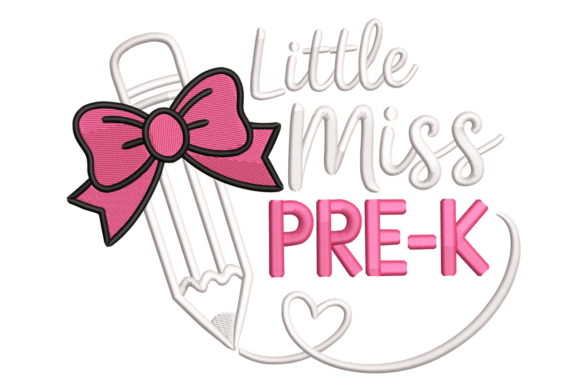
When I opened Little Miss Pre-K for the first time, I didn’t just see a machine embroidery design—I saw a moment. That quiet, tender pride of a child stepping into her first classroom, clutching a brand-new pencil like it’s a magic wand. The large white pencil tied with a giant hot pink bow isn’t just decorative; it’s emotionally resonant. It leans into softness—not cutesy overload, not forced whimsy—but genuine warmth. As a designer who’s stitched hundreds of Back To School pieces, I immediately knew this wasn’t filler. It’s a focused, confident embroidery file built for real human connection.
Where It Shines: Real Projects, Real Customers
Last week, I used Little Miss Pre-K on a set of organic cotton tote bags for a local preschool’s welcome kit—handmade product meets purpose-driven gifting. The result? Instant recognition. Parents paused mid-conversation to point at the bow. Teachers smiled and said, “That’s *her* pencil.” That kind of reaction doesn’t happen with generic fonts or clip-art florals. It happens when shape, scale, and sentiment align.
The design works beautifully on medium-weight fabrics: sweatshirt embroidery (especially on crewnecks), baby embroidery (onesies, burp cloths, and swaddle blankets), and embroidered patches meant for backpacks or denim jackets. Its clean silhouette reads well even at 3.5”–4”, making it ideal for custom apparel where clarity matters more than complexity. I’ve also stitched it onto linen tea towels and pillow covers for nursery decor—and each time, it held its charm without overwhelming the textile.
For Etsy sellers and small shop owners, Little Miss Pre-K is a quietly strategic asset. It pairs naturally with neutral palettes (cream, heather gray, oatmeal) but pops with intention on darker backgrounds—if you choose thread colors thoughtfully. It’s not a standalone novelty; it’s a story starter. Buyers don’t just purchase a design—they invest in a feeling they want to give someone else.
Where to Proceed With Care
Like any strong design, Little Miss Pre-K has boundaries—and respecting them keeps your finished product professional and durable. Avoid using it on highly textured fabrics (like bouclé or thick terry) without testing stitch density first. The satin stitch on the bow’s ribbon edges can snag or flatten if the fabric fights the needle too much.
On stretchy knits—think toddler tees or ribbed baby caps—always use cutaway stabilizer and consider reducing stitch density slightly in the bow’s center curve. That hot pink bow isn’t just bold in color; it’s dense in coverage. On thin fabric (like lightweight poplin), that density can cause puckering unless stabilized properly.
And yes—it’s tempting to shrink it down for a cap front or tiny onesie pocket. But resist going under 3”. The pencil’s clean lines and bow’s dimension rely on enough real estate to breathe. Tiny lettering isn’t part of this file, so no worries there—but don’t add your own small text without checking how it interacts with the existing fill stitch areas.
Design Notes Every Embroidery Professional Should Run Through
- Test before committing: Stitch Little Miss Pre-K on scrap fabric matching your final project’s weight, weave, and stretch—even if it’s “just a tote bag.”
- Check thread contrast early: That white pencil reads beautifully on navy or charcoal, but only if your white thread is truly bright (not off-white). Test black-and-white mockups to gauge value contrast.
- Review stitch density visually: Zoom in on the bow’s knot area. If it looks overly solid or heavy in the digital preview, consider whether your machine handles dense fills smoothly on your chosen fabric.
- Confirm hoop size compatibility: While the description doesn’t specify dimensions, assume standard medium hoop use (5x7” or larger). Don’t force it into a 4x4” without verifying clearance around the pencil’s length.
- Inspect small details: Look closely at how the pencil eraser and tip are rendered—are they defined with running stitch outlines or subtle fill gradations? That tells you how forgiving it’ll be on low-tension setups.
- Validate commercial use: Before listing finished items or digital embroidery files on Etsy or your own shop, confirm licensing terms. This isn’t implied—it must be verified.
Why It Builds Trust—Not Just Cuteness
In handmade product markets, buyers aren’t just buying embroidery—they’re buying confidence. Confidence that the item will last through laundry cycles, that the bow won’t fray after three washes, that the pencil won’t look pixelated or rushed. Little Miss Pre-K delivers that trust because it’s balanced: generous curves, intentional negative space, and a rhythm between satin and fill stitches that feels deliberate—not rushed or over-digitized.
For craft business owners, that translates directly to repeat customers and word-of-mouth referrals. A parent who receives a personalized gift with Little Miss Pre-K stitched cleanly on a soft cotton apron doesn’t just remember the gift—they remember how carefully it was made. That perception elevates your entire brand, especially when paired with consistent presentation (clean tags, thoughtful packaging, accurate mockups).
Final Thought: A Design That Earns Its Place
Not every embroidery file earns a permanent spot in my working library. Many fade after one season or get buried under technical compromises. Little Miss Pre-K isn’t like that. It’s versatile without being vague, charming without being saccharine, and detailed without being fussy. Whether you’re stitching it for a boutique’s holiday embroidery collection, prepping an Etsy seller’s best-selling tote bag design, or building a cohesive line of nursery decor, it holds its ground—and invites sincerity.
If you’re evaluating it for your next project, ask yourself: Does it reflect the care I want my customers to feel? Does it fit the hand-feel and durability of what I’m making? And most importantly—does it leave room for the person receiving it to imagine their own story inside that bow? If the answer is yes, you already know what to do next.